Vastu for Windows: The Small Detail That Changes How Your Home Feels
Have you ever walked into someone’s house and felt instantly at ease? Nothing fancy. No expensive furniture. Just a room full of soft morning light and a gentle breeze coming through.
And then there are homes that feel the opposite. Everything is neat, the paint is fresh, but something feels heavy. You can’t quite explain it.
Very often, the difference comes down to windows.
In Vastu Shastra, windows are called the eyes of a home. They decide how much light comes in, which way the air flows, and what kind of energy settles in each room. Get them right, and the house feels light and happy. Get them wrong, and you may notice poor sleep, frequent arguments or money that never seems to stay.
Let’s talk about it in simple terms.
So, Why Does Windows Matter in Vastu?
Vastu is all about balance between the five elements: earth, water, fire, air and space. Windows handle two of the most important ones, air and sunlight.
Morning sunlight is gentle and healing. Afternoon sun from the south and west is harsh and draining. Vastu simply asks you to let in more of the first and less of the second. That’s really the heart of it. Once you understand this, most window rules start making sense on their own.
Which Direction Is Best for Windows?
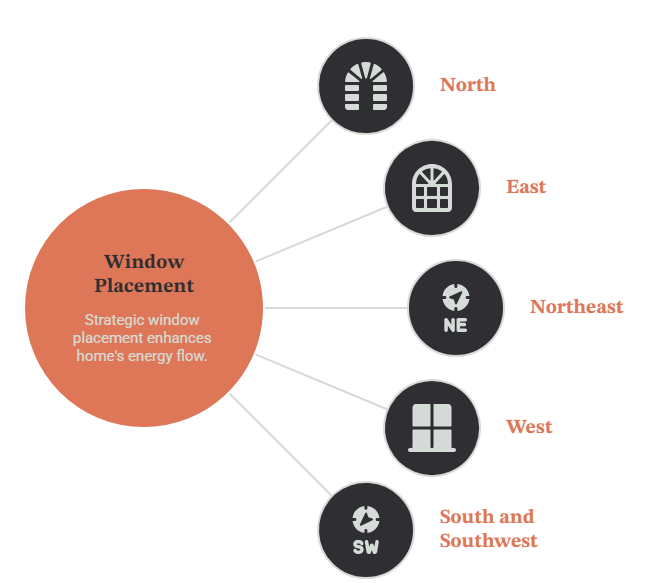
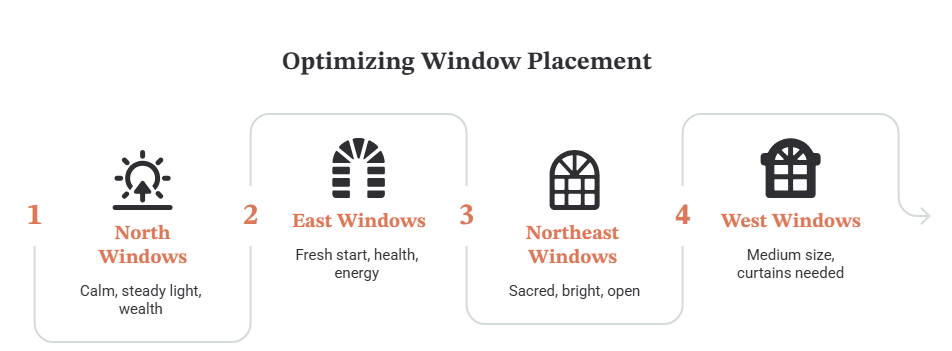
North is the direction of Lord Kuber, the god of wealth. Big windows here are believed to open the door (quite literally) to new opportunities. The light from the north is also calm and steady, so rooms on this side feel pleasant all day.
East is where the sun rises. If you’ve ever woken up to sunlight on your face, you know how good that feels. East windows bring health, energy and a fresh start every morning. If a room can have only one good window, let it face east.
Northeast is the most sacred corner of any home. Keep it open, clean and bright. A window here is a real blessing, so please don’t block it with a cupboard or a heavy sofa.
West windows are fine, but keep them medium-sized. The evening sun can get intense, so curtains help.
South and southwest are meant to feel solid and closed. These zones give a home its stability. Large windows here are often linked to stress, health issues and money leaking out. But if your flat already has them, don’t worry. We’ll get to the fixes in a bit.
How Many Windows Should You Have?
Traditional Vastu prefers an even number of windows, like 2, 4 or 6. Many experts also suggest avoiding numbers that end in zero.
But honestly, the direction matters far more than the count. More windows in the north and east, fewer in the south and west. If you remember just that one line, you’re already ahead.
Size, Shape and a Small Thing Most People Ignore
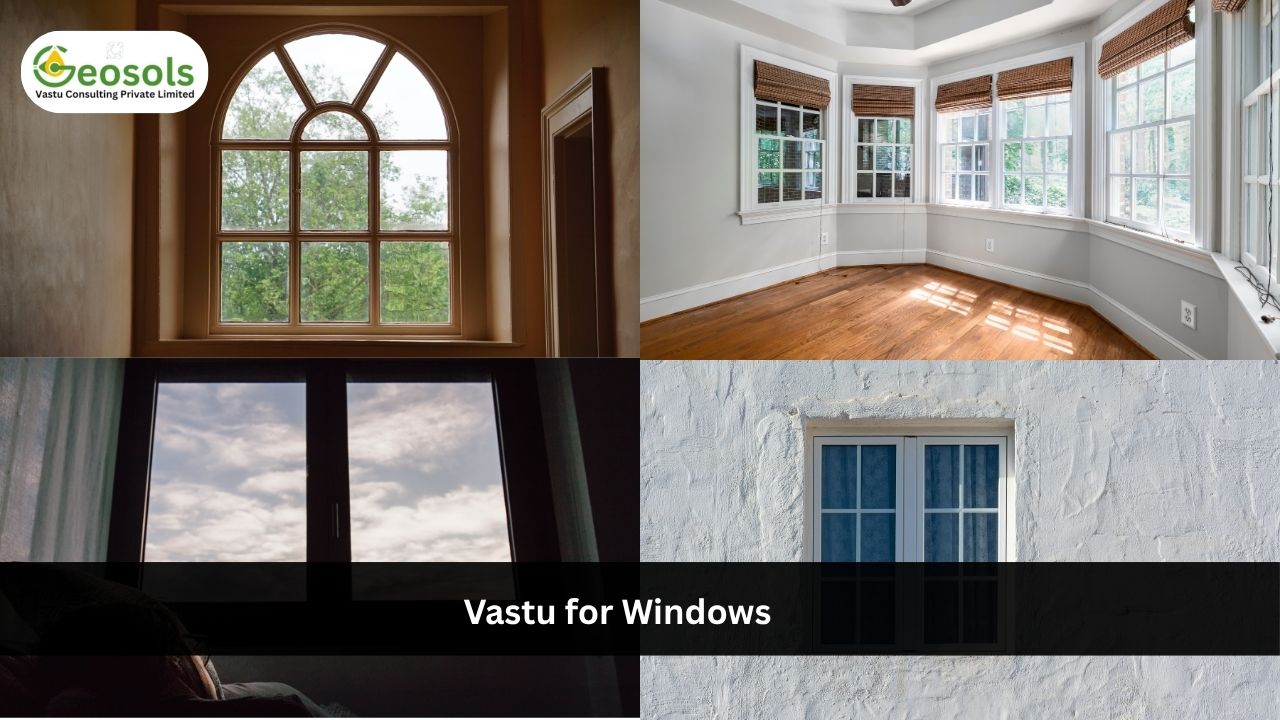
Square or rectangular windows work best. Odd shapes like triangles can disturb the flow of energy.
Windows in the north and east can be bigger. Those in the south and west should be smaller.
And here’s the thing people usually overlook: how your windows open and close. A window that creaks, gets stuck or doesn’t shut properly is seen as a sign of blocked energy. It’s a tiny fix, a bit of oil or a new hinge, and yet it makes a surprising difference to how a room feels.
Room by Room: Where Should the Windows Be?
Living room: This is where the family comes together, so let it be bright. North or east windows work beautifully here.
Bedroom: East or north is ideal. Try not to sleep with a window right behind your head. If you have no choice, keep it closed at night with a thick curtain. You’ll likely notice your sleep improve.
Kitchen: An east window is perfect. Whoever cooks gets gentle morning light, and the fire element stays balanced.
Pooja room: A small window in the east or north, so natural light falls softly on the deity. Nothing more is needed.
Kids’ room or study: East and north again. Fresh light helps young minds stay focused. Place the study table so your child faces east or north while studying.
Bathroom: Good ventilation is a must. East or north windows work well, or an exhaust fan if space is tight.
Little Mistakes That Quietly Affect Your Home
A cracked window pane that you keep meaning to replace. Glass so dusty that the sunlight barely gets through. Windows kept shut all day because of the AC. A cactus sitting on the windowsill because it “looks nice.”
These seem harmless, but in Vastu, each of them adds up. Broken glass is linked with negative energy. Dirty windows block light. A closed home can’t breathe. And thorny plants near openings are believed to invite conflict. Swap the cactus for a tulsi or money plant, and wipe those windows once a week. Simple.
Also check what your window faces. A pole, a dead wall or a tree trunk right outside is called a vedha (obstruction) in Vastu. A light curtain or a plant placed inside can soften its effect.
“But I Can’t Change My Windows!”
This is what we hear most often. You’ve bought a flat, or you’re living on rent, and the windows are fixed. Breaking walls isn’t an option.
That’s completely okay.
Deepak Kumar Saini has spent more than 28 years correcting Vastu defects without any renovation or demolition, and window problems are some of the easiest to balance. Here are a few things you can start with today:
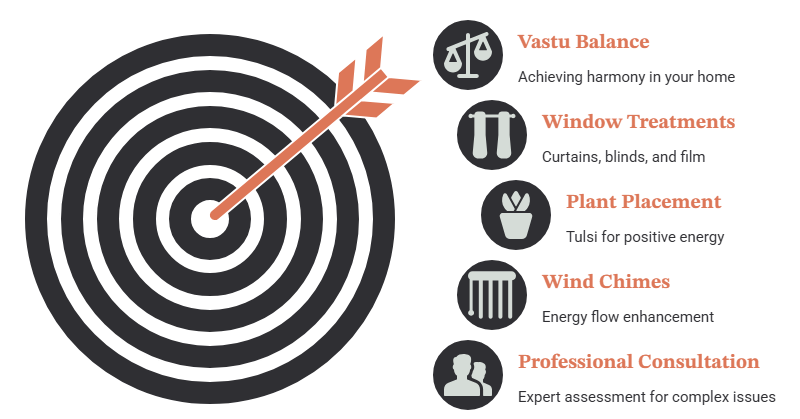
Hang thick, darker curtains on south and southwest windows, and keep light, airy ones (white, cream or pale green) on the north and east. Open your north and east windows every morning, even if it’s just for fifteen minutes. Keep a tulsi plant near an east-facing window. A metal wind chime near a west or northwest window helps keep energy moving. For very large south-facing windows, blinds or frosted film cut the harsh light without making the room dark.
For bigger concerns, like a huge window in the southwest of the master bedroom, or a home with hardly any openings in the north and east, it’s best to get the space checked properly. Every home has its own story, and general tips can only take you so far.
Questions People Often Ask
Which direction is best for windows as per Vastu?
North and east, with northeast being especially good.
Is a south-facing window bad?
Not always. A small one is fine. A large one can be balanced with heavy curtains and a few simple remedies.
How many windows should a house have?
An even number is preferred, but direction matters more than the exact count.
Is it okay to have a window behind the bed?
It’s better to avoid it. If you can’t, keep it closed and covered at night.
Can window Vastu problems be fixed without breaking walls?
Yes. Most can be corrected with curtains, plants, small adjustments and energy balancing.