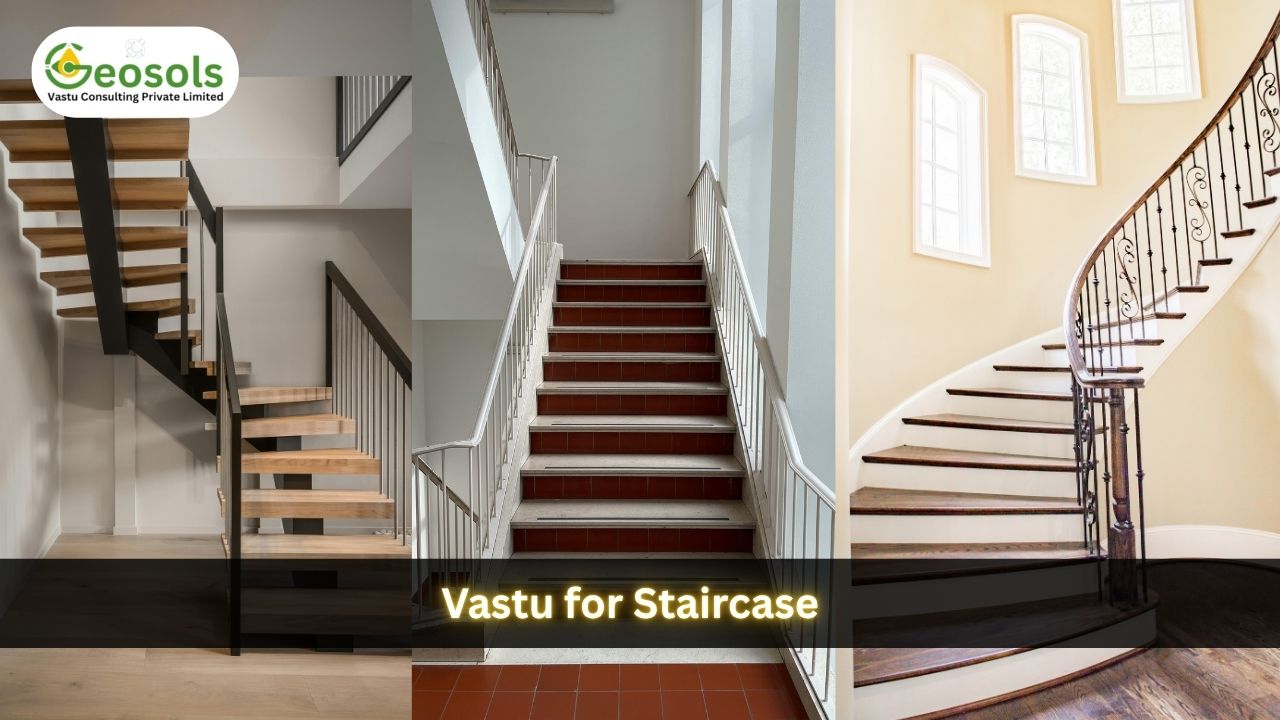
Vastu for Staircase: The Part of Your Home That Moves Energy Up and Down
We climb them every day without a second thought. Up to the bedroom, down for chai, up again because you forgot your phone. Stairs are so ordinary that most of us never stop to ask whether they’re in the right place.
But in Vastu Shastra, the staircase is one of the heaviest parts of a home, both in weight and in energy. It connects one floor to another, and the way it’s placed can quietly affect health, money and peace at home.
Ever noticed how some homes feel heavy on one side? Or how a family keeps facing one setback after another, even when everything else seems fine? Sometimes, the staircase has something to do with it.
Let’s walk through it, one step at a time.
Why the Staircase Matters in Vastu
A staircase is a big structure. It carries weight, it blocks light, and it decides how people and energy move through a house.
Vastu wants the light, open zones of a home (north, east and northeast) to stay free. Heavy things belong in the south, west and southwest. Since stairs are among the heaviest parts of any building, where they sit makes a real difference.
Best Direction for a Staircase
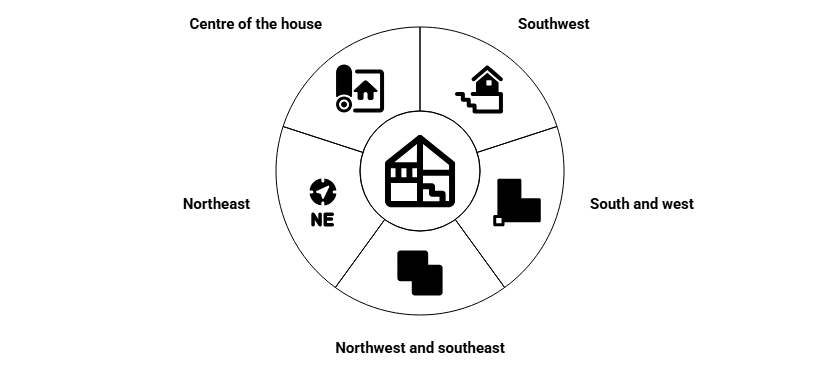
Southwest is the best place for a staircase. This zone is meant to be heavy and strong, and a staircase here adds stability to the whole home.
South and west are also good choices. They can easily carry the weight without disturbing the balance of the house.
Northwest and southeast are acceptable if there’s no other option, though not ideal.
Northeast is the one to avoid. It is the most sacred corner of a home, the zone of clarity, health and spiritual energy. A staircase here is believed to press down on that energy, and families often talk about money worries, health problems or a constant sense of stress.
The centre of the house (Brahmasthan) should also be kept free. A staircase in the middle of the home is believed to block the heart of the house.
Which Way Should the Stairs Go Up?
This is a small detail that many people miss.
Stairs should climb in a clockwise direction. In simple words, as you go up, you should be moving from north to south, or from east to west. So you start low in the north or east, and you reach the top in the south or west.
Anticlockwise stairs are linked with slow growth and obstacles in Vastu. If your staircase turns, check which way it turns. You might be surprised.
How Many Steps Should a Staircase Have?
Vastu prefers an odd number of steps, like 9, 11, 15, 17 or 21.
There’s an old tradition behind this. The steps are counted in a cycle of three: Labh (gain), Alabh (loss) and Labh again, or in some versions, Indra, Kaal, Raja. The idea is that your last step should land on gain, not loss. A simple way to check: divide the total number of steps by 3. If the remainder is 2, you’re on the right count.
Honestly, if this sounds too complicated, just remember: odd is better than even.
Shape, Design and the Little Things
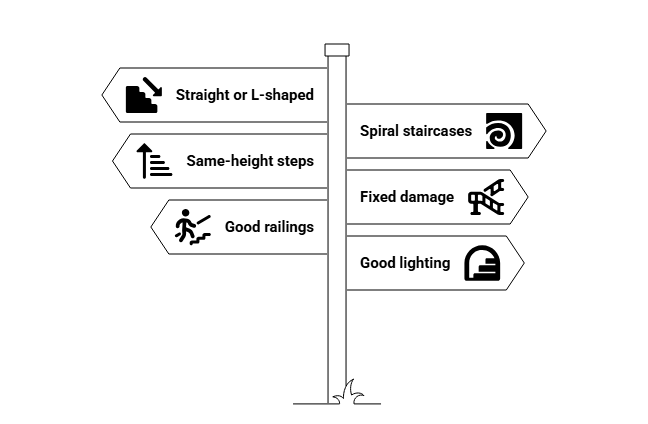
Straight or L-shaped stairs are the best choice. They feel steady and simple.
Spiral staircases look beautiful, but Vastu doesn’t favour them. The twisting shape is linked with confusion and health troubles. If you love the look, keep it for a terrace or garden, not the main staircase of the home.
Every step should be the same height. Uneven steps are not just a safety issue. They also break the smooth flow of energy.
Broken steps and loose railings should be fixed quickly. In Vastu, damage in a staircase is linked with problems in the family’s progress. It’s also simply safer, especially with kids and elders at home.
Good railings and handholds are a must. A staircase should feel secure, not scary.
Lighting matters. A dark staircase feels heavy and tiring to climb. Keep it well lit, especially at the start and the end.
Where the Staircase Starts and Ends
A staircase should not start or end right in front of the main door. When stairs face the entrance, the energy coming into the home rushes straight up or down instead of settling. Many people also link it with money flowing out quickly.
It’s also better if the staircase doesn’t start from inside the kitchen, the pooja room or a bedroom. Stairs need their own space, ideally in a hallway or a corner of the living area.
And if you have a basement, try not to have one continuous staircase running from the basement right up to the top floors. A separate flight for the basement is preferred.
What to Keep Under the Staircase
This is a question we hear a lot, because in Indian homes, nothing goes to waste. The space under the stairs often becomes a store, a shoe rack, a mini study or even a pooja corner.
Here’s what works and what doesn’t.
Fine to keep: Light storage, a shoe rack, old files, seasonal items. Just keep it tidy. A dusty, crammed space under the stairs is not good for anyone.
Avoid: A pooja room or mandir, a kitchen, a toilet, a bedroom or a study table. These need open, uplifting energy, and the weight of the stairs above presses down on them. A child studying under the stairs every day, for example, may struggle to focus.
Also avoid: Keeping a locker or valuables here. Your money deserves a better spot.
Colours for the Staircase
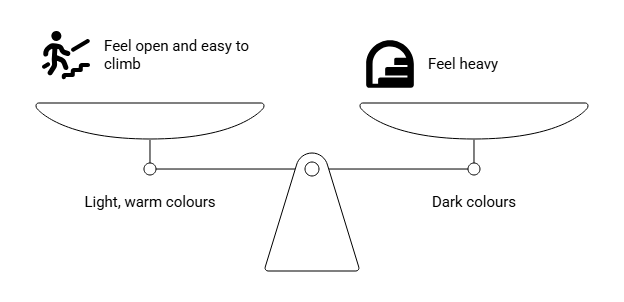
Light, warm colours work best. Think cream, beige, light brown, soft yellow or off-white. They make the staircase feel open and easy to climb.
Avoid black, dark red and very dark greys. They make the space feel heavy, and a staircase is already heavy enough.
“My Staircase Is in the Northeast. Now What?”
Please don’t panic. This is one of the most common Vastu issues in modern homes and builder floors, especially in cities like Delhi, where layouts are fixed, and space is tight.
Deepak Kumar Saini has been correcting Vastu defects for more than 28 years without any renovation or demolition. Moving a staircase is almost never practical, and in most cases it isn’t needed. The right remedies, chosen after looking at the full layout, can balance the energy of the space.
A few simple things you can start with:
Keep the staircase very well lit, especially if it’s in the northeast. Paint it in light colours. Keep the area under it clean and empty, or use it only for light storage. Fix any broken steps or wobbly railings right away. Make sure the stairs are never cluttered with shoes, bags or old newspapers.
For bigger issues, like a staircase in the centre of the house, one that faces the main door, or one that goes up anticlockwise, it’s best to get the home properly checked. Each layout is different, and the correction depends on where everything else sits.
Questions People Often Ask
Which direction is best for a staircase as per Vastu?
Southwest is the best. South and west are also good.
Is a staircase in the northeast bad?
It is considered a major Vastu defect, but it can be balanced with the right remedies, without breaking anything.
How many steps should a staircase have as per Vastu?
An odd number. Ideally, when you divide the total by 3, the remainder should be 2.
Should stairs go clockwise or anticlockwise?
Clockwise. As you climb, you should move from north to south or from east to west.
Can we build a pooja room under the staircase?
It’s best to avoid it. The same goes for a toilet, kitchen or study table.
Is a spiral staircase okay as per Vastu?
It’s not recommended for the main staircase of the home.
Can staircase Vastu be fixed without renovation?
Yes. Most staircase issues can be corrected with lighting, colours, clearing the space underneath and specific Vastu remedies.